CHOOSE A VERSION
5 versions · same consoleChoose an original release, regional version, revision, bootleg or clearly labelled ROM hack/mod, then press Play. Hacks may change the gameplay. Switching versions restarts the player.
- Default · Midway
- Come Come (Petaco SA bootleg of Puck Man) [Bootleg]
- ROM hack / mod · Caterpillar Pacman Hack
- Abscam
- Buccaneer
Selected: Default · Midway · USA
The game loads when you press Play · press “Play Now” inside the game if it asks.
Pac-Man (Midway)
Pac-Man
Pac-Man - Arcade Classic
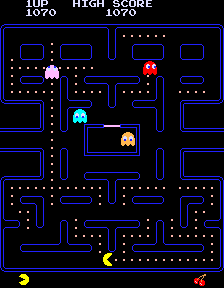
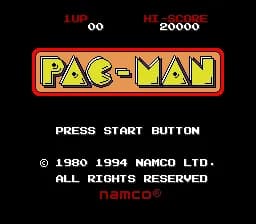
Pac-Man is a 1980 maze game that Namco developed for arcades. Namco released it in Japan as Puck Man on May 22, 1980, and Midway Manufacturing brought it to North America the same year. This is the Midway release.
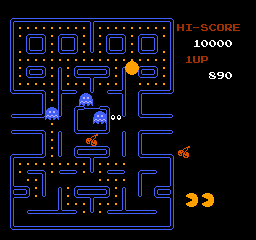
You guide Pac-Man around an enclosed maze, eating every dot while four colored ghosts chase him: Blinky in red, Pinky in pink, Inky in cyan and Clyde in orange. Clearing all the dots moves you to the next level, and short comic cutscenes with Pac-Man and Blinky play between levels. A ghost catching Pac-Man costs a life, and the game is over when no lives remain. Large flashing power pellets sit near the four corners; eating one turns the ghosts blue, sends them the other way and lets Pac-Man eat them for bonus points, with each ghost in a row worth more. An eaten ghost's eyes travel back to the center box, where it regenerates. After enough dots, a bonus item, usually fruit, appears below the center box.
Namco began making games in-house after it bought Atari's struggling Japanese division in 1974. Toru Iwatani, 24 at the time, had made Gee Bee in 1978, the first video game Namco produced. Wanting arcades to feel more family-friendly, he set out to make a cheerful, nonviolent game that would draw women and couples. He built it around eating, and the working title Pakkuman came from the Japanese onomatopoeia paku paku taberu, which describes a mouth opening and closing again and again. Work started in early 1979, and finishing it took one year and five months, longer than any video game before it. Nine other Namco staff joined him, among them hardware engineer Shigeichi Ishimura, programmer Shigeo Funaki and composer Toshio Kai.
Before showing it to distributors, Namco America changed the names of the ghosts and the title. Namco presented Pac-Man next to Rally-X at the AMOA tradeshow in November 1980, where executives expected Rally-X to sell best that year and Play Meter saw mild interest in both. Atari turned down the chance to distribute it, so Midway Manufacturing took both games for North America and announced the manufacturing rights on November 22.
The response at AMOA 1980 was mild. Play Meter found it a cute game that grows on players but said the sound gets annoying after a while. Once released, it beat expectations with wide critical and commercial success. In Japan it started as a modest hit behind Namco's own Galaxian before becoming the highest-grossing arcade game there in 1980 on the Game Machine charts, and it was the fourth highest-grossing arcade game in Japan for 1981.
What makes it different
- Each ghost behaves differently: Blinky chases Pac-Man directly, Pinky and Inky try to get in front of him and corner him, while Clyde either chases him or runs away depending on how far away Pac-Man is.
GAME INFO
More Pac-Man Games
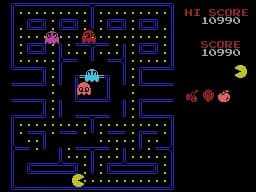
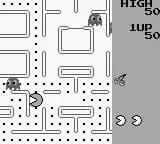
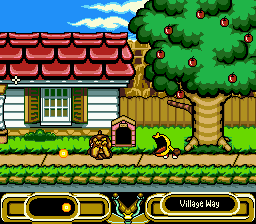
Ready for another round? Explore more Pac-Man games and console editions. Choose a game below to play it on its own page.
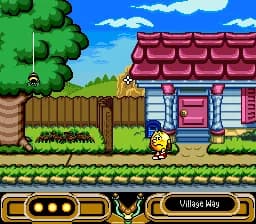
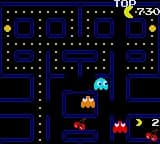
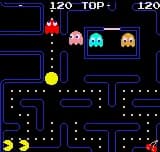
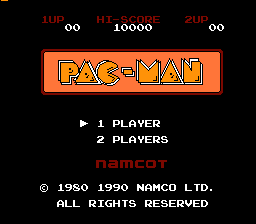
How to play Pac-Man online
You steer Pac-Man through the maze and try to eat every dot without getting caught by a ghost. Eat a power pellet to turn the ghosts blue, then go after them for bonus points before they flash white and recover. Grab the bonus fruit when it appears below the center box.
Tips
- Use the warp tunnels at the sides of the maze to cross to the far side of the screen; ghosts move slower when they enter and leave them.
CONTROLS
Controls
- Arrow Keys — Joystick / Movement
- X — Button 1
- S — Button 2
- Z — Button 3
- A — Button 4
- Q — Button 5
- E — Button 6
- Enter — Start / 1P
- V — Coin / Insert
Pac-Man FAQ
Why was Puck Man renamed?
Namco executives feared vandals would turn the P in Puck Man into an F. Masaya Nakamura picked Pac-Man because it was closer to the Japanese title Pakkuman, and the name Snapper appeared in early American promotional material.
How did the Atari 2600 version turn out?
Tod Frye designed the 1982 Atari 2600 conversion, which Atari, Inc. published. Critics attacked its inaccurate take on the arcade game and its flickering ghosts, yet it sold over seven million copies.
What do the fruit icons on the bottom of the screen mean?
They show which level you are on.

COMMENTS (0)
No comments yet. Be the first to share your thoughts.