CHOOSE A VERSION
2 versions · same consoleChoose an original release, regional version, revision, bootleg or clearly labelled ROM hack/mod, then press Play. Hacks may change the gameplay. Switching versions restarts the player.
- Default · street fighter 2' 920513 etc
- Street Fighter II' - Champion Edition (YYC bootleg set 2, 920313 etc) [Bootleg]
Selected: Default · street fighter 2' 920513 etc · Japan, USA, Europe
The game loads when you press Play · press “Play Now” inside the game if it asks.
Street Fighter II' - Champion Edition (street fighter 2' 920513 etc)
Street Fighter II' - Champion Edition
Street Fighter II' - Champion Edition Overview
Street Fighter II: Champion Edition is a fighting game that Capcom developed and published for arcades in 1992. In Japan it was released as Street Fighter II Dash. It updates Street Fighter II: The World Warrior from 1991 and is the first of several revised versions of that game in the Street Fighter series.
The main change is the roster. M. Bison, Sagat, Vega and Balrog, the four Grand Masters who were the final CPU opponents in The World Warrior, are now playable against the computer or another player. They are toned down from their CPU-only form but still strong next to the original eight. Clearing single-player mode with one of them shows a shared ending with all four portraits, the chosen fighter on top, and scrolling text for that character.
This version is also the first in the series to allow mirror matches, so any character can face a clone of itself. The copy wears an alternate color scheme, such as a red dress for Chun-Li or blue skin for Blanka, and carries a blue name tag below its life bar. Because of this, single-player mode now runs through all 12 fighters, with one extra bout as a mirror match. Players can also pick the standard or alternate colors themselves through the button they press at the select screen.
The moves of the original eight were adjusted for better balance, and Ryu and Ken start to play more differently from each other with this version. Stage backgrounds get new color palettes, character portraits are redrawn and some endings have revised art.
Game Machine ranked Street Fighter II Dash as Japan's most successful table arcade cabinet in May 1992. Among arcade games in Japan it ranked second in earnings for 1992, behind The World Warrior, and fourth for 1993. In the United States it debuted in March 1992 with strong orders, sat at number one on RePlay's upright cabinet earnings chart from May until September 1992, and was named the top dedicated arcade game of 1992 by RePlay and the AMOA. When it launched in Australia, crowds queued outside arcades to play it.
GAME INFO
More Street Fighter Games
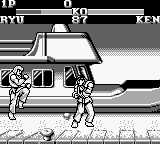
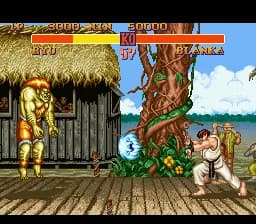
Ready for another round? Explore more Street Fighter games and console editions. Choose a game below to play it on its own page.
How to play Street Fighter II' - Champion Edition online
Pick any of the 12 fighters, including the four Grand Masters, and fight the computer or another player. The button you use on the select screen decides whether your fighter wears the standard or the alternate colors. In single-player mode you face every fighter, plus one mirror match against a copy of your own character.
CONTROLS
Controls
- Arrow Keys — Joystick / Movement
- X — Button 1
- S — Button 2
- Z — Button 3
- A — Button 4
- Q — Button 5
- E — Button 6
- Enter — Start / 1P
- V — Coin / Insert
Street Fighter II' - Champion Edition FAQ
How many Champion Edition arcade units were sold?
About 140,000 Street Fighter II Dash units sold in Japan at ¥160,000 each, earning ¥22.4 billion in hardware revenue, and between 20,000 and 25,000 units sold in the United States.
How did Champion Edition do on the Play Meter charts?
In June 1992 it led the Play Meter arcade charts as the top-grossing video game overall, a spot it held through September 1992.
Did Champion Edition come to home consoles?
Yes. NEC Home Electronics published a PC Engine version in Japan on June 12, 1993. The Genesis/Mega Drive version, Street Fighter II': Special Champion Edition, came out in Japan on September 28, 1993, and also took in the extra content from Street Fighter II Turbo.
What did an arcade unit cost in Australia?
AU$6,000 per unit, about US$4,406 at the time.
COMMENTS (0)
No comments yet. Be the first to share your thoughts.