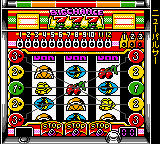
The game loads when you press Play · press “Play Now” inside the game if it asks.
Pachipachi Pachi-Slot - New Pulsar Hen (Japan)
Pachipachi Pachi-Slot - New Pulsar Hen
Pachipachi Pachi-Slot - New Pulsar Hen - Simulation Classic
- Game Boy Color
- Simulation
- 5· 0 votes
GAME INFO
- Platform
- Game Boy Color
- Genre
- Simulation
- Players
- 1
- Region
- Japan
How to play Pachipachi Pachi-Slot - New Pulsar Hen online
Getting Started
When you start the game, you'll arrive at a Japanese menu screen. The first option is usually 'Start Game' or 'Play' (look for the kanji スタート or プレイ). Use the D-Pad to highlight and press the A button (X key) to confirm. You'll then see a slot machine interface with a credit counter and bet adjustment options. Press the B button (S key) to open the bet menu, then use the D-Pad to change your wager per spin.
The core loop is simple: set your bet, press the action button (usually the A button once you're at the machine) to spin the reels. After each spin, the game pauses briefly to show your result and any winnings. You can repeat this until you run out of credits. There is no time limit or story progression - it's a pure simulation of playing a pachi-slot machine. Since menus are in Japanese, you may need to experiment to find the credit purchase or game over restart options, but most screens have a consistent layout: the top shows your credits, the middle is the reels, and the bottom has a few small icons for settings or pay table access.
CONTROLS
Controls
- Arrow Keys: D-Pad / Movement
- X: A button (jump / confirm)
- S: B button (run / attack / cancel)
- Enter: Start / Pause
- V: Select
Pachipachi Pachi-Slot - New Pulsar Hen FAQ
Who developed Pachipachi Pachi-Slot - New Pulsar Hen?
The developer is not widely documented in English sources. It was published under a pachinko-focused label, likely by a small Japanese company such as Elektron or Tecmo, but this is unconfirmed.
Does Pachipachi Pachi-Slot - New Pulsar Hen have a multiplayer or co-op mode?
No. This game is strictly a single-player experience, as it simulates a solo slot machine interaction. There is no multiplayer, link cable support, or cooperative play.
Is Pachipachi Pachi-Slot - New Pulsar Hen an official release, a fan hack, a prototype, or another kind of build?
It is an official commercial release for the Game Boy Color in Japan. It bears a standard Nintendo-licensed seal and was sold at retail. It is not a hack, prototype, or homebrew.
You may also like
All Game Boy Color games

GAME INFO
- Platform
- Game Boy Color
- Genre
- Simulation
- Players
- 1
- Region
- Japan
COMMENTS (0)
No comments yet. Be the first to share your thoughts.