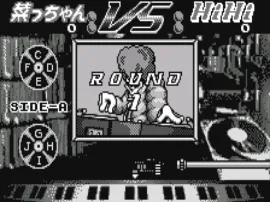
The game loads when you press Play · press “Play Now” inside the game if it asks.
Turntablist - DJ Battle (J) [M]
Turntablist - DJ Battle
Getting to Know Turntablist - DJ Battle
- WonderSwan
- Music
- 5· 0 votes
Turntablist - DJ Battle is a Japanese-exclusive WonderSwan cartridge that dropped in the early 2000s. It's a music-themed game built around virtual turntable battles, tapping into the brief craze for DJ culture that popped up in arcade and console games around that time. The WonderSwan was Bandai's answer to Nintendo's Game Boy, and titles like this one show how developers tried to cram unconventional arcade experiences into a monochrome handheld.
What you actually do in Turntablist - DJ Battle is compete in rhythm-based head-to-head matches. You scratch, crossfade, and mix tracks by pressing the D-pad and buttons in time with on-screen cues, much like a simplified DJ Hero but two decades earlier. The objective is to outscore an opponent by hitting notes accurately and building a better set. The game likely includes a handful of songs and a tournament ladder, though without a translation the finer menu options remain a mystery.
Today, Turntablist - DJ Battle is a curiosity for WonderSwan collectors and rhythm game historians. It's not a deep or polished simulation - the small screen and limited buttons force compromises - but it captures a specific moment when music games were experimenting with new themes. If you're into obscure portable titles or just want to see how a DJ game worked on a monochrome handheld, it's worth a look. Just don't expect the complexity of later rhythm titles.
GAME INFO
- Platform
- WonderSwan
- Genre
- Music
- Region
- Japan
How to play Turntablist - DJ Battle online
Getting Started
When you boot up Turntablist - DJ Battle, you'll likely land on a Japanese title screen followed by menus in Japanese. Use the D-pad to highlight options and the A button (X on keyboard) to confirm. The main mode is probably a single-player tournament against a series of DJ opponents. You can also look for a practice or free play mode to learn the controls without pressure.
The core gameplay involves a vertical or horizontal note lane where symbols scroll from top to bottom (or right to left). Your goal is to press the corresponding button or D-pad direction exactly as each symbol reaches the hit zone. The game judges your timing and builds a score. Missing notes drains your health or lets the opponent gain points. After each round, the game compares scores and declares a winner.
Since all text is in Japanese, pay attention to the visual layout. Numbers next to a character's name likely indicate score or life. The first menu option is usually 'start game' or 'single player'. If you see a two-player option, it may require a link cable, which most emulators don't support. Experiment with the D-pad and buttons to figure out each mode. The rhythm is strict, so try to tap along with the beat rather than reacting late.
CONTROLS
Controls
- Arrow Keys: D-Pad / Movement
- X: A button
- S: B button
- Enter: Start
- V: Sound
Turntablist - DJ Battle FAQ
Is Turntablist - DJ Battle exclusive to WonderSwan or did it appear on other systems?
It is exclusive to the WonderSwan handheld. No ports or re-releases on other platforms have been documented. The game was specifically developed for Bandai's monochrome system.
In what year was Turntablist - DJ Battle originally released?
The exact release year is not widely documented. Most sources estimate it came out around 2000, during the WonderSwan's active lifespan, but no precise date has been confirmed in English-language databases.
Can players save progress in Turntablist - DJ Battle?
The game likely uses a password system or no save feature at all, which was common for WonderSwan cartridges of the era. Without a battery-backed save, you must enter a code to resume progress after turning the console off.
You may also like
All WonderSwan games Digimon Adventure 02 - D1 Tamers
 Alchemist Marie & Elie - Futari no Atelier
 Dragonball
 Uchuu Senkan Yamato
 Hunter X Hunter - Greed Island
 Pocket Fighter
 Digimon Digital Monsters - Anode & Cathode Tamer - Veedramon Version
 Puzzle Bobble
 Digimon Tamers - Brave Tamer
 Digimon Tamers - Digimon Medley
 From TV Animation - One Piece - Niji no Shima Densetsu
 Rockman EXE WS
GAME INFO
- Platform
- WonderSwan
- Genre
- Music
- Region
- Japan
COMMENTS (0)
No comments yet. Be the first to share your thoughts.