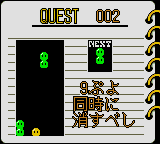
The game loads when you press Play · press “Play Now” inside the game if it asks.
Nazo Puyo (Japan)
Nazo Puyo
Nazo Puyo Overview
GAME INFO
More Puyo Puyo Games
Ready for another round? Explore more Puyo Puyo games and console editions. Choose a game below to play it on its own page.
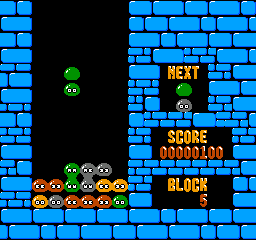
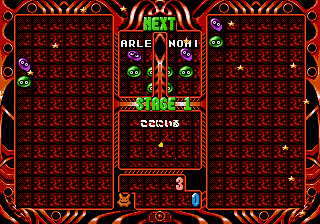

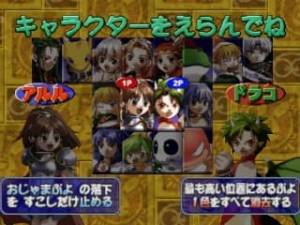
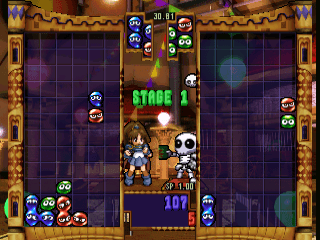
How to play Nazo Puyo online
Getting Started
After starting the game, you will see a title screen and then a menu in Japanese. Use the D-Pad (Arrow Keys) to navigate and press X (A button) to select. The main menu likely offers a "Challenge" mode and possibly a settings screen. Choose the challenge option to begin. If you are unfamiliar with Japanese, the menus are simple enough that trial and error works - just remember that the first option is usually "Start".
Once you enter a challenge, a board with Puyo pairs will begin to drop from the top. Your goal varies per challenge: some require you to pop a certain number of Puyos, others ask you to clear the board, and a few might limit your moves or time. You control the falling pair with the D-Pad (left/right to move, down to drop faster), and swap the two Puyos with A (X key) or B (S key). Match four or more same-colored Puyos in a connected group to make them disappear and score points.
The core loop is simple: read the challenge objective (even without Japanese, the number icons give hints), then drop Puyos strategically to meet that goal. If you fail a challenge you can retry from the menu. There is no versus opponent, so take your time planning moves. This is a pure puzzle game, so the satisfaction comes from solving each unique board configuration.
CONTROLS
Controls
- Arrow Keys: D-Pad / Movement
- X: Button 1
- S: Button 2
- Enter: Start / Pause
Nazo Puyo FAQ
Is Nazo Puyo exclusive to Game Gear or did it appear on other systems?
Nazo Puyo was released only for the Sega Game Gear in Japan. No ports or versions for other platforms are known to exist. It remains a handheld-exclusive spinoff of the Puyo Puyo series.
What makes Nazo Puyo stand out among Game Gear titles of its era?
Instead of competing against an AI opponent, Nazo Puyo presents a series of predefined challenge missions with specific objectives. This mission-based structure was unusual for puzzle games on the Game Gear, offering a deliberate, puzzle-solving experience rather than fast-paced versus play.
Which regions was Nazo Puyo released in?
Nazo Puyo was only released in Japan. There was no official localization for North America or Europe, so the game remains in its original Japanese language.





COMMENTS (0)
No comments yet. Be the first to share your thoughts.