CHOOSE A VERSION
2 versions · same consoleChoose an original release, regional version, revision, bootleg or clearly labelled ROM hack/mod, then press Play. Hacks may change the gameplay. Switching versions restarts the player.
Selected: Default · USA · USA
The game loads when you press Play · press “Play Now” inside the game if it asks.
Dig Dug II - Trouble in Paradise (USA)
Dig Dug II - Trouble in Paradise
What is Dig Dug II - Trouble in Paradise?
- Nintendo Entertainment System
- Action
- 5· 0 votes
GAME INFO
- Platform
- Nintendo Entertainment System
- Genre
- Action
- Released
- 1989
- Players
- 1
- Region
- USA
- Based on
- Dig Dug
More Dig Dug Games
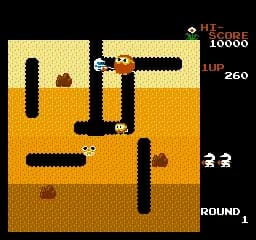
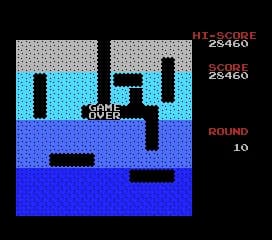
Ready for another round? Explore more Dig Dug games and console editions. Choose a game below to play it on its own page.
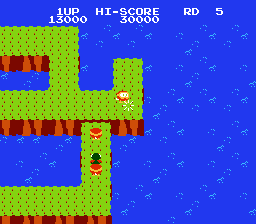
How to play Dig Dug II - Trouble in Paradise online
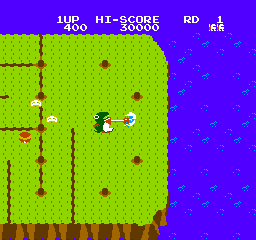
To get started in Dig Dug II, begin by selecting the game from the NES menu. Once in, you will control Taizo Hori on an island where you must defeat enemies. The primary goal is to eliminate all enemies on the screen by either inflating them or using blocks to crush them.
The game has a unique mechanic where the landscape can be altered by digging through sections of the island. As you dig, be mindful of your surroundings and the enemies, as they can quickly overwhelm you. Mastering the balance of digging and attacking is key to progressing through the levels.
CONTROLS
Controls
- Arrow Keys — D-Pad / Movement
- X — A button (jump / confirm)
- S — B button (run / attack / cancel)
- Enter — Start / Pause
- V — Select
Dig Dug II - Trouble in Paradise FAQ
Can players save progress in Dig Dug II - Trouble in Paradise?
There is no save feature in Dig Dug II, so players must complete the game in one sitting. The game uses traditional arcade-style mechanics, where you start from the beginning upon restarting.
Is Dig Dug II - Trouble in Paradise exclusive to Nintendo Entertainment System or did it appear on other systems?
While primarily released for the NES, Dig Dug II has been made available on various platforms through emulation and compilations over the years. However, it did not see a release on other major consoles at the time of its original launch.
Who developed Dig Dug II - Trouble in Paradise?
The game was developed by Namco, a company well-known for its contributions to the gaming industry and for creating iconic arcade titles. Namco played a significant role in the evolution of video games during the 1980s and 1990s.
You may also like
All Nintendo Entertainment System games



GAME INFO
- Platform
- Nintendo Entertainment System
- Genre
- Action
- Released
- 1989
- Players
- 1
- Region
- USA
- Based on
- Dig Dug
COMMENTS (0)
No comments yet. Be the first to share your thoughts.