The game loads when you press Play · press “Play Now” inside the game if it asks.
Crazy Bullet
Crazy Bullet
What is Crazy Bullet?
Crazy Bullet is a shooting game released for the MSX1 home computer system, most likely during the early to mid-1980s. The original publisher and developer are not widely documented, which is common for many niche titles that appeared on the platform. It belongs to the larger wave of arcade-style shooters that were ported to or created for MSX machines, often emphasizing fast action and simple controls.
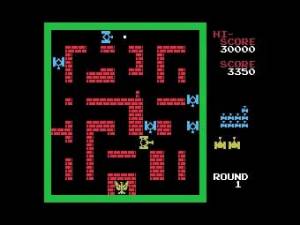
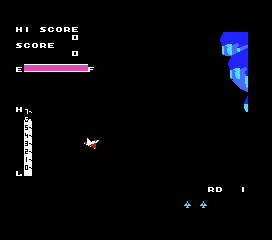
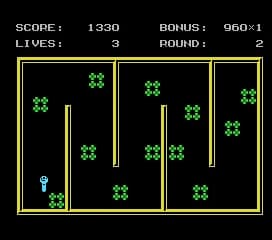
In Crazy Bullet, you control a small ship or character moving across a static or scrolling playfield, firing at incoming enemies while avoiding their attacks. The core gameplay loop involves dodging projectiles and destroying waves of targets to earn points and progress through stages. Power-ups might appear to enhance your weapon or speed, but the exact mechanics beyond basic shooting are not well recorded. The game likely follows the straightforward design typical of early MSX shooters, with a focus on reflexes and memorization.
Today, Crazy Bullet stands as a minor but charming entry in the MSX1 library, especially for collectors and enthusiasts of obscure shooters. It does not push technical boundaries or introduce unique concepts, but it represents the era's enthusiasm for arcade-like experiences on home computers. If you enjoy simple, no-frills shooting games from the 8-bit era, this one is worth a quick try to see how it plays.
In Crazy Bullet, you control a small ship or character moving across a static or scrolling playfield, firing at incoming enemies while avoiding their attacks. The core gameplay loop involves dodging projectiles and destroying waves of targets to earn points and progress through stages. Power-ups might appear to enhance your weapon or speed, but the exact mechanics beyond basic shooting are not well recorded. The game likely follows the straightforward design typical of early MSX shooters, with a focus on reflexes and memorization.
Today, Crazy Bullet stands as a minor but charming entry in the MSX1 library, especially for collectors and enthusiasts of obscure shooters. It does not push technical boundaries or introduce unique concepts, but it represents the era's enthusiasm for arcade-like experiences on home computers. If you enjoy simple, no-frills shooting games from the 8-bit era, this one is worth a quick try to see how it plays.
GAME INFO
How to play Crazy Bullet online
Getting Started: When you launch the game, you will likely see a title screen or a brief introduction. Press Enter or X to start. The objective is to survive as long as possible while destroying enemies that appear on screen. Use the Arrow Keys to move your character or ship around the playfield. Press X to fire your main weapon, and S if the game supports an alternate attack.
The core loop is straightforward: avoid incoming enemy fire, shoot down targets, and collect any items or power-ups that drop. Many MSX shooters feature a score counter and possibly a lives system - if you get hit, you lose a life and restart from a checkpoint or beginning of the stage.
Since this is likely a Japanese title, menus may be in Japanese and navigation might be trial‑and‑error. Typically, pressing Start (Enter) advances through menus, and Select (V) may cycle options. Stick with it - the gameplay is simple enough to grasp even without knowing the language.
CONTROLS
Controls
- Arrow Keys: D-Pad / Movement
- X: Trigger 1
- S: Trigger 2
- Enter: Start
Crazy Bullet FAQ
Who developed Crazy Bullet?
The specific developer behind Crazy Bullet is not widely documented in English sources. It appears to have been produced by a small, possibly uncredited team during the MSX1 era, which makes attribution difficult.
Does Crazy Bullet have a multiplayer or co-op mode?
No, Crazy Bullet is a single-player experience only. The game does not offer any multiplayer or cooperative options, staying true to the solo arcade shooter format common on MSX hardware.
Is Crazy Bullet exclusive to MSX 1 or did it appear on other systems?
Crazy Bullet appears to be exclusive to the MSX1 platform. No ports or adaptations for other home computers or consoles have been documented, suggesting it was a title specifically released for that system.


COMMENTS (0)
No comments yet. Be the first to share your thoughts.