CHOOSE A VERSION
2 versions · same consoleChoose an original release, regional version, revision, bootleg or clearly labelled ROM hack/mod, then press Play. Hacks may change the gameplay. Switching versions restarts the player.
Selected: Default · USA · USA
The game loads when you press Play · press “Play Now” inside the game if it asks.
Rastan Saga II (USA)
Rastan Saga II
Rastan Saga II Overview
- SEGA Genesis
- Platformer
- 5· 0 votes
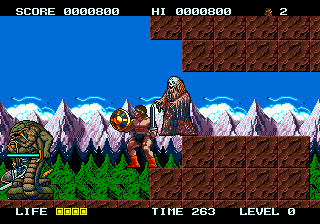
You control the barbarian Rastan as he fights his way through side-scrolling levels filled with monsters and traps. The core loop is straightforward: move left to right, slash enemies with your sword, collect power-ups and keys, and survive against bosses. Jumping and climbing are part of the platforming, and you can pick up different weapons and items hidden in chests. The game also features a simple magic system where you can use special attacks by finding runes.
For fans of arcade-style action games, Rastan Saga II is a solid example of late-80s Taito design. It's not as famous as other Genesis launch titles, but it captures the gritty fantasy vibe of its arcade predecessor with decent ports of the visuals and music. The challenge is real - expect to memorize enemy patterns and use your resources carefully. It's a worthwhile play if you enjoy classic sword-and-sorcery sidescrollers like Golden Axe or Barbarian, though it's a bit more linear and focused on combat over exploration.
GAME INFO
- Platform
- SEGA Genesis
- Genre
- Platformer
- Publisher
- Taito
- Developer
- Taito
- Released
- 1989
- Players
- 1
- Region
- USA
More Rastan Saga Games
Ready for another round? Explore more Rastan Saga games and console editions. Choose a game below to play it on its own page.
How to play Rastan Saga II online
One important mechanic is that your sword can be upgraded by finding better weapons in the environment. Different weapons have different ranges and damage. Also, you can collect magic runes that let you perform a screen-clearing attack. Use it wisely, as runes are limited. The game is fairly linear--just keep moving right and fighting. The difficulty ramps up quickly, so don't be afraid to use continues to learn enemy patterns.
If you're playing on an emulator, saving your state can help with tough sections. The game has no save feature, so it's a pure arcade experience. Enjoy the pixel art and the soundtrack, which were well-received for their time.
CONTROLS
Controls
- Arrow Keys: D-Pad / Movement
- X: A button
- S: B button
- Z: C button
- A: X button (6-button pad)
- Q: Y button (6-button pad)
- E: Z button (6-button pad)
- Enter: Start / Mode
Rastan Saga II FAQ
Is there anything iconic or memorable about Rastan Saga II?
The opening theme music and the colorful, detailed sprite work for the monsters are often cited as highlights. The game also introduces the concept of Rastan receiving his name through his deeds, which is a neat narrative twist for a sequel that predates its predecessor.
Is Rastan Saga II considered easy to pick up or challenging?
It is moderately challenging, with tight platforming sections and enemies that require pattern memorization. The arcade roots are clear, meaning it can be punishing for newcomers but fair with practice.
Is Rastan Saga II exclusive to SEGA Genesis or did it appear on other systems?
This specific version is a port of the 1988 Taito arcade game, which also appeared on the Amiga, Atari ST, Commodore 64, and ZX Spectrum under the name Nastar Warrior. The Genesis version is one of the later ports.
You may also like
All SEGA Genesis games
GAME INFO
- Platform
- SEGA Genesis
- Genre
- Platformer
- Publisher
- Taito
- Developer
- Taito
- Released
- 1989
- Players
- 1
- Region
- USA
COMMENTS (0)
No comments yet. Be the first to share your thoughts.