
The game loads when you press Play · press “Play Now” inside the game if it asks.
Dragon Ball GT - Final Bout
Dragon Ball GT - Final Bout
Dragon Ball GT - Final Bout - Fighting Classic
- PlayStation PSX
- Fighting
- 5· 0 votes
Dragon Ball GT: Final Bout is a PlayStation fighting game. TOSE developed it, and Bandai released it in 1997 in Japan, Europe and North America. Japan and Europe know it as Dragon Ball: Final Bout, and it was the first Dragon Ball video game released in North America.
As in the Butōden series, fights take place on a two-dimensional plane, while the arenas and fighters are 3D and come from both the Z and GT parts of the Dragon Ball franchise. Fighters can fly to nearly any spot on the field. The game's own Special Knockout Trick attacks are dramatic versions of each fighter's long-range ki attacks: the camera cuts to the attacker, who powers up and fires. While the attacker charges, the word counter flashes in the lower right corner, and the defender can block or fire back. Firing back starts a beam clash, and whoever presses the beam button faster drives the other's attack back into them. The Meteor Smash returns from Dragon Ball Z: The Legend and chains melee attacks with a button combination.
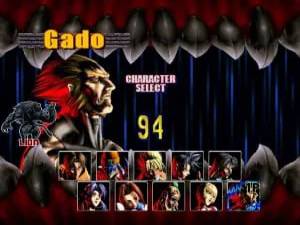
Vs Man pits two players against each other, while Vs Com sends you through random computer opponents and a boss. The Tournament runs a single-round elimination bracket for up to 8 fighters. Build Up Mode, taken from Ultimate Battle 22, lets you train a fighter and save it to a memory card, with strength rising to triple digits.
Bandai kept the game hidden for most of its development and revealed it at the 1997 Tokyo Toy Show, when it was half-finished. Kenji Yamamoto composed the music; only five pieces were new. Hironobu Kageyama sang four new songs, among them the opening theme "Biggest Fight" and "Hero of Heroes", the theme for Super Saiyan 4 Goku.
The North American release replaced the Japanese dialogue with an uncredited American cast, although battle voices stayed Japanese. An untitled instrumental rock track replaced "Biggest Fight", and the sound test sits on the title screen instead of behind a cheat code. Atari reissued it in North America in 2004 with new artwork from Toei Animation.
The game sold 245,000 units in Japan and 19,564 in the United States by 2002. Most reviews were negative, pointing to a slow pace, a jerky camera and controls that react late. Jeff Gerstmann of GameSpot liked the beam clashes but found too little variety in fighters and moves, while most of Electronic Gaming Monthly's four reviewers were positive.
What makes it different
- Special Knockout Trick attacks can be answered with your own beam, and the faster button presser wins the clash.
GAME INFO
- Platform
- PlayStation PSX
- Genre
- Fighting
- Publisher
- Bandai
- Released
- 1997
- Players
- 1-2
- Region
- Japan, USA
How to play Dragon Ball GT - Final Bout online
Pick a fighter and battle on a 2D plane, flying almost anywhere on the field. When an opponent powers up a Special Knockout Trick, watch for the counter prompt in the lower right corner and either block or fire your own ki attack, then press the beam button as fast as you can to win the clash.
Start with Vs Com against computer opponents, or train your own fighter in Build Up Mode and keep it on a memory card.
Tips
- Fighters trained in Build Up Mode can be loaded from the memory card into Build up the Tournament.
- Build Up Mode adds an experience chart to each character's profile, so you can follow a fighter's growth.
CONTROLS
Controls
- Arrow Keys — D-Pad / Movement
- X — Cross ( × )
- S — Square ( □ )
- Z — Triangle ( △ )
- A — Circle ( ○ )
- Q — L1 shoulder
- E — R1 shoulder
- Enter — Start
- V — Select
Dragon Ball GT - Final Bout FAQ
Who developed Dragon Ball GT: Final Bout?
TOSE developed the game, and Bandai published it.
Who sings the songs in Final Bout?
Hironobu Kageyama performs all four new songs, with Kuko on backup vocals. Besides "Biggest Fight" and "Hero of Heroes", there are the two closing songs, "Thank You" and "Kimi o Wasurenai".
Was there a soundtrack album?
Yes. Zain Records released it in Japan on September 16, 1997, with the Future Trunks theme "Hikari no Willpower" as a hidden bonus track.
What did GamePro dislike about the game?
GamePro attacked the Meteo moves as cheap and drawn out, and also criticized the sparse backgrounds and childish taunts.
Was the game reissued in Japan?
It sold well enough to come back a year later in the PlayStation the Best for Family series.
You may also like
All PlayStation PSX games


GAME INFO
- Platform
- PlayStation PSX
- Genre
- Fighting
- Publisher
- Bandai
- Released
- 1997
- Players
- 1-2
- Region
- Japan, USA
COMMENTS (0)
No comments yet. Be the first to share your thoughts.