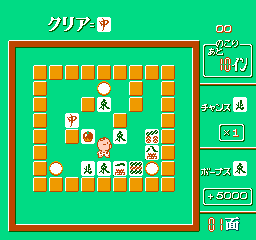
The game loads when you press Play · press “Play Now” inside the game if it asks.
Tonjan! (Japan)
Tonjan!
Tonjan! Overview
- Nintendo Entertainment System
- Platformer
- 5· 0 votes
GAME INFO
- Platform
- Nintendo Entertainment System
- Genre
- Platformer
- Players
- 1
- Region
- Japan
How to play Tonjan! online
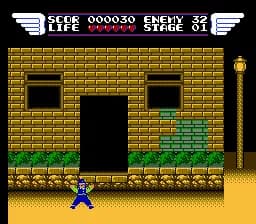
Getting started in Tonjan! involves selecting your game mode from the main menu, which is presented in Japanese. If you're unfamiliar with the language, look for the first option to start a new game. Once in the game, players will control the main character as they traverse through various levels filled with hazards and enemies.
The core loop involves running, jumping, and defeating enemies while collecting items that can aid in your progress. Timing your jumps and attacks is crucial, as each level presents different challenges that require quick reflexes. Since the game is in Japanese, players may need to rely on visual cues to navigate menus and understand power-ups, but the gameplay itself is intuitive enough for anyone familiar with platformers to pick up and enjoy.
CONTROLS
Controls
- Arrow Keys — D-Pad / Movement
- X — A button (jump / confirm)
- S — B button (run / attack / cancel)
- Enter — Start / Pause
- V — Select
Tonjan! FAQ
Who developed Tonjan!?
The developer of Tonjan! is not widely documented, leaving a gap in information about its creation.
Is Tonjan! exclusive to Nintendo Entertainment System or did it appear on other systems?
Tonjan! is exclusive to the Nintendo Entertainment System and did not see releases on other platforms.
Does Tonjan! have a multiplayer or co-op mode?
Tonjan! does not feature a multiplayer or co-op mode, focusing instead on a single-player experience.
You may also like
All Nintendo Entertainment System games
GAME INFO
- Platform
- Nintendo Entertainment System
- Genre
- Platformer
- Players
- 1
- Region
- Japan
COMMENTS (0)
No comments yet. Be the first to share your thoughts.