
The game loads when you press Play · press “Play Now” inside the game if it asks.
Fairy
Fairy
What is Fairy?
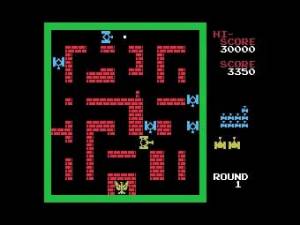
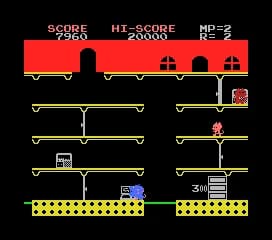
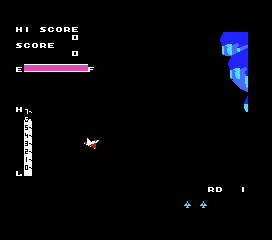
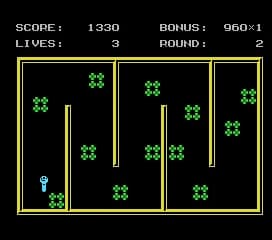
Fairy is an MSX1 title that appeared in the early 1980s, a period when Japanese home computers were flooded with simple action games. The exact developer and publisher are not widely documented, but it belongs to the wave of cartridge-based releases for the MSX standard. As an older title, it reflects the hardware's limitations - blocky sprites, limited color palettes, and straightforward gameplay loops intended for short sessions.
What the player actually does in Fairy is not clearly recorded, but MSX1 games of this era typically involve guiding a character through static or scrolling screens, avoiding obstacles, and collecting items. Many such games relied on quick reflexes and simple joystick or keyboard input. Without a preserved manual or detailed walkthrough, the precise mechanics remain a matter of speculation, though the genre conventions suggest an arcade-like experience.
For modern retro enthusiasts, Fairy represents a curious piece of MSX history - an obscure title that may feel dated but offers a glimpse into the early days of Japanese home computing. It is not a landmark game, but it can be fun to explore for those interested in the platform's library. If you enjoy discovering forgotten curiosities, this one is worth a quick look, but don't expect complexity or polish.
What the player actually does in Fairy is not clearly recorded, but MSX1 games of this era typically involve guiding a character through static or scrolling screens, avoiding obstacles, and collecting items. Many such games relied on quick reflexes and simple joystick or keyboard input. Without a preserved manual or detailed walkthrough, the precise mechanics remain a matter of speculation, though the genre conventions suggest an arcade-like experience.
For modern retro enthusiasts, Fairy represents a curious piece of MSX history - an obscure title that may feel dated but offers a glimpse into the early days of Japanese home computing. It is not a landmark game, but it can be fun to explore for those interested in the platform's library. If you enjoy discovering forgotten curiosities, this one is worth a quick look, but don't expect complexity or polish.
GAME INFO
How to play Fairy online
Getting Started
As the game's specific mechanics are not well documented, start by pressing Enter to see if a title screen or menu appears. Use the arrow keys to move your character around the screen - if the game scrolls, try moving to the edges to progress. Press X to interact or jump, and S to attack or cancel any prompt.
The core loop likely involves moving through a series of screens or a small world, avoiding enemies or hazards, and reaching an endpoint. Collectible items may grant points or power-ups. If the game is entirely in Japanese, the menus will likely use simple kanji or hiragana; try to memorize the options by trial and error. Use the Select key (V) to pause or access a status screen if one exists.
Because the game is from the early MSX era, the difficulty curve may be steep, with limited continues. Pay attention to patterns in enemy movement or level layouts. If you get stuck, searching for an online scan of the manual might help, but many such games were designed to be figured out by playing repeatedly.
CONTROLS
Controls
- Arrow Keys: D-Pad / Movement
- X: Trigger 1
- S: Trigger 2
- Enter: Start
Fairy FAQ
Who developed Fairy?
The developer of Fairy is not widely documented. No specific studio or individual is consistently credited for this MSX1 title in available archives.
Does Fairy have a multiplayer or co-op mode?
Fairy is a single-player game. Multiplayer or cooperative play was not common for MSX1 action games of this nature.
Is Fairy considered easy to pick up or challenging?
Without preserved reviews, the difficulty is unclear, but many MSX1 games from the early 80s were designed to be challenging, with limited lives and no save states.


COMMENTS (0)
No comments yet. Be the first to share your thoughts.