CHOOSE A VERSION
3 versions · same consoleChoose an original release, regional version, revision, bootleg or clearly labelled ROM hack/mod, then press Play. Hacks may change the gameplay. Switching versions restarts the player.
Selected: Default · USA · USA
The game loads when you press Play · press “Play Now” inside the game if it asks.
Pebble Beach Golf Links (USA)
Pebble Beach Golf Links
Pebble Beach Golf Links on Genesis
- SEGA Genesis
- Sports
- 5· 0 votes
GAME INFO
- Platform
- SEGA Genesis
- Genre
- Sports
- Region
- USA
How to play Pebble Beach Golf Links online
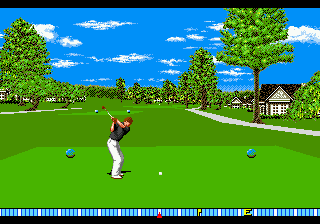
Getting started: When you boot up Pebble Beach Golf Links, you'll first choose a game mode. Most likely you'll start with Stroke Play or Tournament mode. The game presents a course map; you can select which hole to begin on. Before each shot, you'll use the D-Pad to move a crosshair on the screen to choose your target direction.
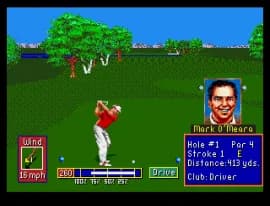
The core loop involves selecting a club from your bag (press Select to cycle through clubs), then setting the power and accuracy. A typical swing mechanic uses a power meter: press the A button to start it rising, then press again to set the power. A second press controls the swing plane or accuracy, depending on the version. Putting uses a similar meter but with slower movement. Aiming into the wind and accounting for terrain slopes is important.
New players should start on the easier tees and choose clubs conservatively. Keep an eye on the wind indicator at the top of the screen. The game simulates real course hazards - sand traps, water, and rough - so precision matters more than raw power. If you are unfamiliar with Pebble Beach, the signature holes like the par-3 7th or the ocean views make the round rewarding even if you shoot over par.
CONTROLS
Controls
- Arrow Keys: D-Pad / Movement
- X: A button
- S: B button
- Z: C button
- A: X button (6-button pad)
- Q: Y button (6-button pad)
- E: Z button (6-button pad)
- Enter: Start / Mode
Pebble Beach Golf Links FAQ
Can players save progress in Pebble Beach Golf Links?
Most versions of Pebble Beach Golf Links do not include a save feature on the Genesis, likely due to cartridge limitations. Players typically must complete a round in one sitting, as progress is not stored between sessions.
What makes Pebble Beach Golf Links stand out among SEGA Genesis titles of its era?
Its realistic depiction of a famous real-world course, combined with input from professional golfer Craig Stadler, gave it an air of authenticity uncommon in 16-bit golf games. The game also features multiple camera angles and detailed course graphics for its time.
Does Pebble Beach Golf Links have a multiplayer or co-op mode?
The Genesis version supports two-player competitive play, allowing each golfer to take turns on the same course. There is no cooperative or team mode, as standard for golf simulations of the period.
You may also like
All SEGA Genesis games


GAME INFO
- Platform
- SEGA Genesis
- Genre
- Sports
- Region
- USA
COMMENTS (0)
No comments yet. Be the first to share your thoughts.