🔊 Tap Play, then press “Play Now”
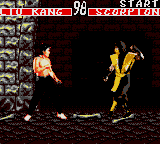
Mortal Kombat (Japan) (v3.3)
Getting to Know Mortal Kombat (Japan) (v3.3)
This is a Japanese version of Mortal Kombat for the Sega Game Gear, specifically labeled as v3.3. Mortal Kombat is a 2D fighting game that made waves with its fully-digitized character graphics and over-the-top violence. It hit arcades in 1992, and like many popular fighters, quickly found its way to home consoles and handhelds. The Game Gear port arrived in 1993, and this particular release is for the Japanese market, which often saw minor tweaks or bug fixes indicated by the version number. If you're hunting for a specific revision, this is it.
The core loop is classic one-on-one combat. You pick a fighter from the roster - icons like Liu Kang, Sub-Zero, and Scorpion - and battle your opponent in rounds. Each character has a set of special moves, like projectiles or teleports, that require specific button sequences. The Game Gear version simplifies the controls slightly but still includes the signature finishing move: a fatality that ends the match in gruesome fashion. The digitized sprites are scaled down but recognizable, and the gameplay emphasizes timing and learning each fighter's strengths.
For retro collectors, this Japanese revision offers a slightly different experience than the Western release. It's a solid port of a groundbreaking fighter, though the small screen and limited buttons mean some nuances are lost. If you're a Mortal Kombat fan or a Game Gear enthusiast curious about how iconic arcade games translated to handhelds, this version is worth a look. It's not the definitive way to play, but it's a fascinating piece of the franchise's history.
The core loop is classic one-on-one combat. You pick a fighter from the roster - icons like Liu Kang, Sub-Zero, and Scorpion - and battle your opponent in rounds. Each character has a set of special moves, like projectiles or teleports, that require specific button sequences. The Game Gear version simplifies the controls slightly but still includes the signature finishing move: a fatality that ends the match in gruesome fashion. The digitized sprites are scaled down but recognizable, and the gameplay emphasizes timing and learning each fighter's strengths.
For retro collectors, this Japanese revision offers a slightly different experience than the Western release. It's a solid port of a groundbreaking fighter, though the small screen and limited buttons mean some nuances are lost. If you're a Mortal Kombat fan or a Game Gear enthusiast curious about how iconic arcade games translated to handhelds, this version is worth a look. It's not the definitive way to play, but it's a fascinating piece of the franchise's history.
How to Play Mortal Kombat (Japan) (v3.3) Online
Getting started: When you boot up this Japanese version, you'll see a title screen with menus in Japanese. The first screen usually presents options like '1 Player' and '2 Players' - the kanji patterns are similar to other fighting games. Press Start (Enter) to proceed. On the character select screen, highlight a fighter using the D-Pad and press the X button to confirm. If you're in a two-player match, both players choose their characters in turn.
The match itself is straightforward: move toward your opponent with the D-Pad, press S for a basic punch or kick (depending on distance), and combine directions with buttons for special moves. For example, down-forward + S might unleash a projectile if your character has one. Blocking is automatic when you hold back (away from the opponent). Each round ends when a fighter's health bar is depleted, and a final round offers the chance to perform a fatality by standing at the right distance and pressing specific buttons - though the timing can be tricky. If you're new to the game, try the classic fighters like Liu Kang or Scorpion to get a feel for the pacing. The menu to adjust difficulty or controls is accessible from the title screen, but unless you read Japanese, stick with the default settings.
The match itself is straightforward: move toward your opponent with the D-Pad, press S for a basic punch or kick (depending on distance), and combine directions with buttons for special moves. For example, down-forward + S might unleash a projectile if your character has one. Blocking is automatic when you hold back (away from the opponent). Each round ends when a fighter's health bar is depleted, and a final round offers the chance to perform a fatality by standing at the right distance and pressing specific buttons - though the timing can be tricky. If you're new to the game, try the classic fighters like Liu Kang or Scorpion to get a feel for the pacing. The menu to adjust difficulty or controls is accessible from the title screen, but unless you read Japanese, stick with the default settings.
Mortal Kombat (Japan) (v3.3) Keyboard Controls
Controls
- Arrow Keys: D-Pad / Movement
- X: Button 1
- S: Button 2
- Enter: Start / Pause
Frequently Asked Questions
Who developed Mortal Kombat?
The original arcade Mortal Kombat was created by Midway. The Game Gear port was developed by Probe Entertainment and published by Acclaim Entertainment, though the Japanese version may have been distributed by a different partner.
Is Mortal Kombat exclusive to Game Gear or did it appear on other systems?
Mortal Kombat appeared on numerous platforms including arcade, Sega Genesis, Super Nintendo, Game Boy, and many home computers. The Game Gear version is one of the portable ports, released alongside the Game Boy and Sega Master System versions.
In what year was Mortal Kombat originally released?
The original arcade Mortal Kombat launched in 1992. The Game Gear port followed in 1993, and this Japanese v3.3 revision likely came shortly after the initial Game Gear release.
Comments (0)