🔊 Tap Play, then press “Play Now”

Mahjong Sengoku Jidai (Japan)

0 Favorites 0 Likes 38 Views
Rate this game:
Embed Code
Mahjong Sengoku Jidai (Japan)
SEGA Master System Board Game 1989 Japan 1 Player 5 (0) 38

Mahjong Sengoku Jidai (Japan)

About Mahjong Sengoku Jidai (Japan)

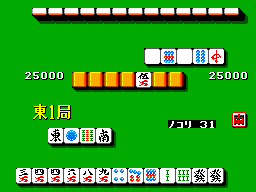
Mahjong Sengoku Jidai (Japan) centers around the classic tile-matching gameplay of Japanese Mahjong, where players aim to complete winning hands by drawing and discarding tiles strategically. The core loop involves careful observation of the tile wall, predicting opponents' moves, and assembling combinations such as sequences, triplets, or pairs. As a single-player experience, the game likely pits the player against AI opponents, requiring both tactical decision-making and an understanding of Mahjong scoring rules common in Japanese variants.

Released in 1989 exclusively in Japan for the SEGA Master System, Mahjong Sengoku Jidai arrived during a period when Mahjong video games were popular in Japan but less common internationally. The SEGA Master System, known as the Mark III in Japan, hosted various puzzle and board game adaptations tailored to local tastes. While the developer and publisher details are not widely documented, the game fits into a niche genre of Mahjong titles that catered to enthusiasts seeking digital versions of traditional games during the late 1980s.

From a modern perspective, the Mahjong gameplay in Sengoku Jidai feels representative of its era, offering a straightforward but somewhat basic Mahjong experience compared to later, more polished iterations. The single-player AI challenge and tile visuals may seem dated, but the fundamental mechanics still hold appeal for fans of classic Mahjong video games. Its focus on traditional rules and turn-based strategy preserves an authentic feel, though it lacks the depth or interface refinements seen in later Mahjong titles on more advanced platforms.

How to Play Mahjong Sengoku Jidai (Japan) Online

New players often underestimate the importance of tile memory and discard prediction in Mahjong Sengoku Jidai. Unlike some puzzle games on the SEGA Master System, success here depends on anticipating which tiles opponents might need and which are safe to discard. Beginners may also struggle with the game's Japanese Mahjong scoring system, which differs from Western variants. To avoid common pitfalls, players should familiarize themselves with the tile types and scoring rules before diving in, and pay close attention to the tiles that have already been played to plan their hand accordingly.

Another frequent mistake is rushing through turns without carefully considering all possible melds and waits. The game rewards patience and strategic thinking rather than speed. Since the SEGA Master System controller layout is simple, players should use the pause function to think over their moves when needed. Taking time to understand the AI’s behavior patterns can also help in formulating winning strategies. In sum, mastering Mahjong Sengoku Jidai requires a blend of Mahjong knowledge and careful observation, typical of Mahjong games on this platform.

Mahjong Sengoku Jidai (Japan) Keyboard Controls

Controls

  • Arrow Keys — D-Pad / Movement
  • X — Button 1 (jump / confirm)
  • S — Button 2 (attack / cancel)
  • Enter — Pause

Frequently Asked Questions

Is Mahjong Sengoku Jidai an official release, a fan hack, a prototype, or another kind of build?
Mahjong Sengoku Jidai is an official release for the SEGA Master System, launched exclusively in Japan in 1989. There is no indication it is a fan hack, prototype, or alternate build.
Is Mahjong Sengoku Jidai considered easy to pick up or challenging?
The game follows traditional Japanese Mahjong rules, which can be challenging for newcomers unfamiliar with the tile sets and scoring. Experienced players of Mahjong generally find it straightforward but requiring strategic thinking.
Is Mahjong Sengoku Jidai exclusive to SEGA Master System or did it appear on other systems?
This title was released only on the SEGA Master System in Japan. There are no widely documented versions for other platforms or regions.

Comments (0)

    More Board Game Games