Tetris (Japan) (Rev A)
What is Tetris (Japan) (Rev A)?
Tetris (Japan) (Rev A) is a well-known puzzle game that was released for the Nintendo Entertainment System. This revision of the classic title is part of the broader Tetris franchise, which originated in the Soviet Union and has seen various adaptations across multiple platforms. The NES version retains the core mechanics that made Tetris a household name, and while the specific developer for this revision isn't widely documented, the original game was created by Alexey Pajitnov.
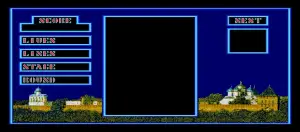
In Tetris, players are tasked with rotating and positioning falling tetrominoes—shapes made up of four square blocks—to create horizontal lines without gaps. When a line is completed, it disappears, and the player earns points. The game speeds up as more lines are cleared, adding to the challenge. Players need to think quickly and strategically to manage the increasing pace and the random nature of the falling pieces, making it a timeless test of skill and reflexes.
This title remains relevant today for its straightforward yet addictive gameplay. Tetris has inspired countless clones and variations, but the NES version holds a nostalgic charm that appeals to both retro gamers and new players alike. Its simplicity is its strength, allowing for quick play sessions while still offering depth for those seeking to master their high scores. The game's historical significance in the gaming landscape makes it a must-try for anyone interested in the evolution of video games.
How to Play Tetris (Japan) (Rev A) Online
To get started with Tetris (Japan) (Rev A), select the game from your emulator and press Start. The game will begin with a single tetromino falling from the top of the screen. Your goal is to manipulate the shape by moving it left, right, and rotating it to fit into the gaps below.
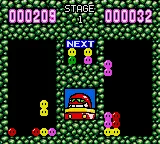
The core loop involves continuously placing tetrominoes to clear lines as they stack up. Pay attention to the next piece displayed on the side of the screen, as this can help you plan your moves in advance. Since the menus are in Japanese, it may take a little time to navigate through the options, but the gameplay itself is intuitive and easy to grasp.
Tetris (Japan) (Rev A) Keyboard Controls
Controls
- Arrow Keys — D-Pad / Movement
- X — A button (jump / confirm)
- S — B button (run / attack / cancel)
- Enter — Start / Pause
- V — Select

Comments (0)