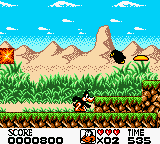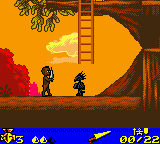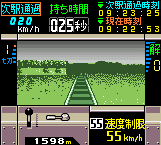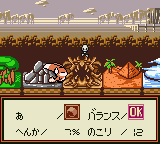
Qui Qui (Japan)
Qui Qui (Japan) on GBC
Qui Qui is a puzzle game that came out exclusively in Japan for the Game Boy Color. The exact release year and publisher aren't widely documented, but it fits squarely in the late-1990s handheld boom when simple, addictive puzzle titles were everywhere. Like many Japan-only Game Boy games, it never saw a Western release, which is why it tends to pop up in import collections and emulation archives today. The game's title and visual style suggest a playful, possibly tile-based mechanic, though concrete details are sparse unless you dig into Japanese-language forums.
What the player actually does in Qui Qui is not fully clear from standard sources, but typical of the puzzle genre on Game Boy Color, you are likely presented with a grid of objects that you must match or arrange according to a set of rules. This could involve swapping adjacent tiles, rotating pieces, or clearing rows by forming patterns. The controls are simple, relying on the D-pad and a couple of buttons, which was standard for pick-up-and-play portable games. Without an English translation, the menu navigation can be a bit trial-and-error, but the gameplay itself is usually intuitive once you see a few moves.
Qui Qui is a niche title even among Japanese Game Boy Color collectors. It never reached the fame of Tetris or Pokémon Puzzle League, so its appeal today is mostly historical or for those who enjoy exploring obscure software. If you like low-stakes puzzle games from the era and don't mind stumbling through Japanese menus, it can be a pleasant curiosity. That said, it is a simple experience and won't surprise anyone looking for deep mechanics or a gripping story.
How to Play Qui Qui (Japan) Online
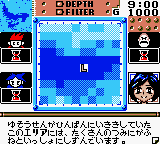
When you first load Qui Qui, you'll see a Japanese title screen. Use the D-pad to navigate the menu - the top option is usually "Start Game" or a similar romanji term like "Gēmu Sutāto". Press X to confirm. The game likely presents a level select or immediately drops you into a puzzle grid. Since no English text exists, pay attention to icons or flashing elements; many puzzle games of this era use visual cues for scoring and objectives.
The core loop involves manipulating tiles or pieces on a board to meet a goal - clearing the stage, achieving a high score, or surviving as long as possible. You can use the D-pad to move a cursor or swap items, and the A and B buttons (X and S on keyboard) to confirm actions. If you make a mistake, there may be a redo or restart option in the pause menu (V for Select, Enter for Start). The game probably tracks your progress with level numbers or points, so even without reading Japanese, you can figure out if you're improving.
For beginners, the best approach is to experiment: try moving different pieces and see what triggers a chain reaction or clears a row. The game is likely forgiving at first, letting you learn by trial. If you get stuck, look for patterns or a "hint" button often mapped to the shoulder keys (Q or E). Because this is a Japanese-only cartridge, expect the pace and difficulty to ramp up gradually without any story interruptions - just pure puzzling.
Qui Qui (Japan) Keyboard Controls
Controls
- Arrow Keys: D-Pad / Movement
- X: A button (jump / confirm)
- S: B button (run / attack / cancel)
- Enter: Start / Pause
- V: Select
Comments (0)