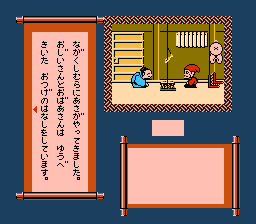
Famicom Mukashibanashi - Shin Onigashima - Zenpen (Japan) (DV 3) (Wii and Wii U Virtual Console)
What is Famicom Mukashibanashi - Shin Onigashima - Zenpen (Japan) (DV 3) (Wii and Wii U Virtual Console)?
Famicom Mukashibanashi - Shin Onigashima - Zenpen is a text-driven adventure game released for the Famicom Disk System in 1987. It was published by Nintendo and represents one of the company's early attempts at interactive storytelling on the platform. This Japanese-only title is the first half of a two-part retelling of the classic folk tale "Shin Onigashima," and it takes advantage of the Disk System's rewritable media to save progress.
The game plays like a traditional command-selection adventure. You navigate a world drawn in simple but charming graphics, using a verb menu to examine objects, talk to characters, and solve puzzles. The core loop involves reading descriptive text, choosing actions from a list (such as "look," "talk," "use"), and advancing the story through logical item combinations. The interface is entirely in Japanese, and the game expects you to experiment with commands to uncover the narrative.
Today, Shin Onigashima - Zenpen is worth trying if you appreciate the history of adventure games on Nintendo consoles or want to see how Japanese developers adapted folk tales into interactive media. It is a niche title, even among Famicom Disk System games, because it relies heavily on language skills and patience with the genre's slower pace. The game's atmosphere and puzzle design hold up reasonably well for fans of classic text adventures, but you should expect a quiet, deliberate experience rather than action or spectacle.
How to Play Famicom Mukashibanashi - Shin Onigashima - Zenpen (Japan) (DV 3) (Wii and Wii U Virtual Console) Online
When you launch the game, you will see the title screen and then a text prompt. Use the D-Pad to highlight your choice from a menu at the bottom of the screen, then press X (A button) to confirm. The game uses a verb-noun system: you select an action like "look" or "talk" and then point that action at an object or character in the scene. If you are stuck, try examining everything in the current room or talking to every character.
Since this is a Japanese-only title, all text is in Japanese. New players should be comfortable with at least basic vocabulary or willing to use a guide. The game saves automatically when you quit, thanks to the Disk System's ability to write to the disk image. If you get lost, backtrack to earlier areas and revisit conversations - the story progresses through specific keyword triggers. Keep an eye on your inventory, as items are often needed hours later.
Famicom Mukashibanashi - Shin Onigashima - Zenpen (Japan) (DV 3) (Wii and Wii U Virtual Console) Keyboard Controls
Controls
- Arrow Keys: D-Pad / Movement
- X: A button (jump / confirm)
- S: B button (run / attack / cancel)
- Enter: Start / Pause
- V: Select


Comments (0)