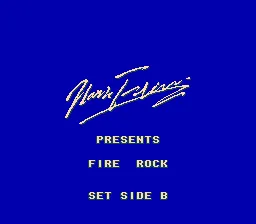
The game loads when you press Play · press “Play Now” inside the game if it asks.
Breeder (Japan)
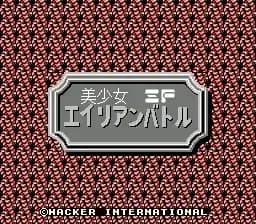
Breeder
What is Breeder?
- Famicom Disk System
- Simulation
- 5· 0 votes
Breeder for the Famicom Disk System centers around a gameplay loop typical of early 1980s Japanese titles, likely involving resource management or creature interaction given the title. Players might engage in tasks such as breeding or raising entities, managing their growth or progress through systematic inputs or mini-games. The Disk System format allowed for save functionality, which suggests a game structure that rewards long-term planning or development over multiple sessions.
Released exclusively in Japan, Breeder appeared on the Famicom Disk System, a peripheral that expanded the capabilities of the Famicom with rewritable disks and additional storage. The exact release year and developer details are not widely documented, which is common for many niche or less prominent Disk System titles. The platform itself was known for experimental games that took advantage of its unique hardware features, often appealing to a more dedicated audience.
While the specifics of Breeder's mechanics remain obscure, the concept of breeding or nurturing as a core gameplay element was somewhat ahead of its time given the era. Many modern simulation and management games owe their roots to these early experiments. However, without more detailed information, it is difficult to fully assess whether the game’s mechanics still feel engaging or have become dated. The Disk System’s limitations and the game's probable niche focus might make it feel slow or limited compared to contemporary standards but potentially rewarding for retro enthusiasts exploring Famicom’s unique library.
GAME INFO
- Platform
- Famicom Disk System
- Genre
- Simulation
- Publisher
- Soft Pro International
- Released
- 1986
- Region
- Japan
How to play Breeder online
First 5 minutes
Upon starting Breeder on the Famicom Disk System, players likely encounter an introductory screen with basic options such as starting a new game or loading a saved disk. The initial gameplay probably involves simple interactions to familiarize the player with the breeding or management system, such as selecting creatures or items to begin the process. Visuals would be typical of the Disk System era, with basic sprites and limited animation.
The first hour
During the first hour, players would engage in the core loop of breeding or managing their subjects, possibly involving feeding, pairing, or training them to achieve growth or specific goals. Progression might require monitoring stats or conditions, with the Disk System’s save feature allowing gradual advancement. Players would need to pay attention to timing and resource allocation to optimize outcomes, reflecting early simulation design principles.
Mastery
Skilled players differentiate themselves by efficiently managing resources and timing breeding cycles to maximize the growth or traits of their creatures. Mastery likely involves understanding the underlying mechanics that govern success, such as hidden variables or optimal sequences of actions. Casual players might struggle with these nuances, while experts exploit them to achieve the best results or complete the game faster.
CONTROLS
Controls
- Arrow Keys — D-Pad / Movement
- X — A button (jump / confirm)
- S — B button (run / attack / cancel)
- Enter — Start / Pause
- V — Select
Breeder FAQ
Who developed Breeder?
The developer of Breeder for the Famicom Disk System is not widely documented, which is not uncommon for some lesser-known Disk System titles.
What makes Breeder stand out among Famicom Disk System titles of its era?
Breeder is notable for potentially focusing on a breeding or management mechanic, a somewhat niche concept on the Disk System that took advantage of the save feature for longer gameplay sessions. This sets it apart from more action-oriented or arcade-style titles common on the platform.
Does Breeder have a multiplayer or co-op mode?
Information about multiplayer or cooperative modes in Breeder is not available, suggesting it is likely a single-player experience typical of simulation or management games on the Famicom Disk System.
You may also like
All Famicom Disk System games Aki to Tsukasa no Fushigi no Kabe
 Yume Koujou - Doki Doki Panic
 Bishoujo Hanafuda Club Vol.2 - Koikoi Bakappana Hen
 Bishoujo Shashinkan - Studio Cut
 Bishoujo Sexy Slot
 Bishoujo Hanafuda Club Vol.1 - Oichokabu Hen
 Transformers - The Headmasters
 Bakutoushi Patton-kun
 Aliens - Alien 2
 Tenshitachi no Houkago
 Backgammon
 Chitei Tairiku Ordola
GAME INFO
- Platform
- Famicom Disk System
- Genre
- Simulation
- Publisher
- Soft Pro International
- Released
- 1986
- Region
- Japan
COMMENTS (0)
No comments yet. Be the first to share your thoughts.